Engineering programs rarely fail because a single decision was obviously irrational.
More often, operational problems emerge from decisions that appeared individually reasonable when assessed within narrow technical boundaries, but which interacted poorly once integrated into the wider operational system.
This distinction becomes increasingly important in complex capability environments where reliability, availability, maintainability, logistics, structural behaviour, environmental exposure, and operational usage all interact continuously across the lifecycle.
In these environments, engineering consequence rarely remains isolated.
A reliability assumption influences maintenance demand. A packaging decision affects accessibility. Structural modifications alter vibration behaviour. Environmental exposure reshapes degradation patterns. Maintenance burden affects operational availability. Availability changes influence fleet utilisation, spare demand, workforce loading, and sustainment cost.
Operational systems absorb all of these interactions simultaneously whether programs account for them or not.
This is one reason operational availability often degrades not through catastrophic engineering failure, but through accumulations of technically defensible decisions whose combined effects were never fully assessed at system level.
The issue is not incompetence.
The issue is fragmented engineering interpretation.
A Familiar Type of Decision
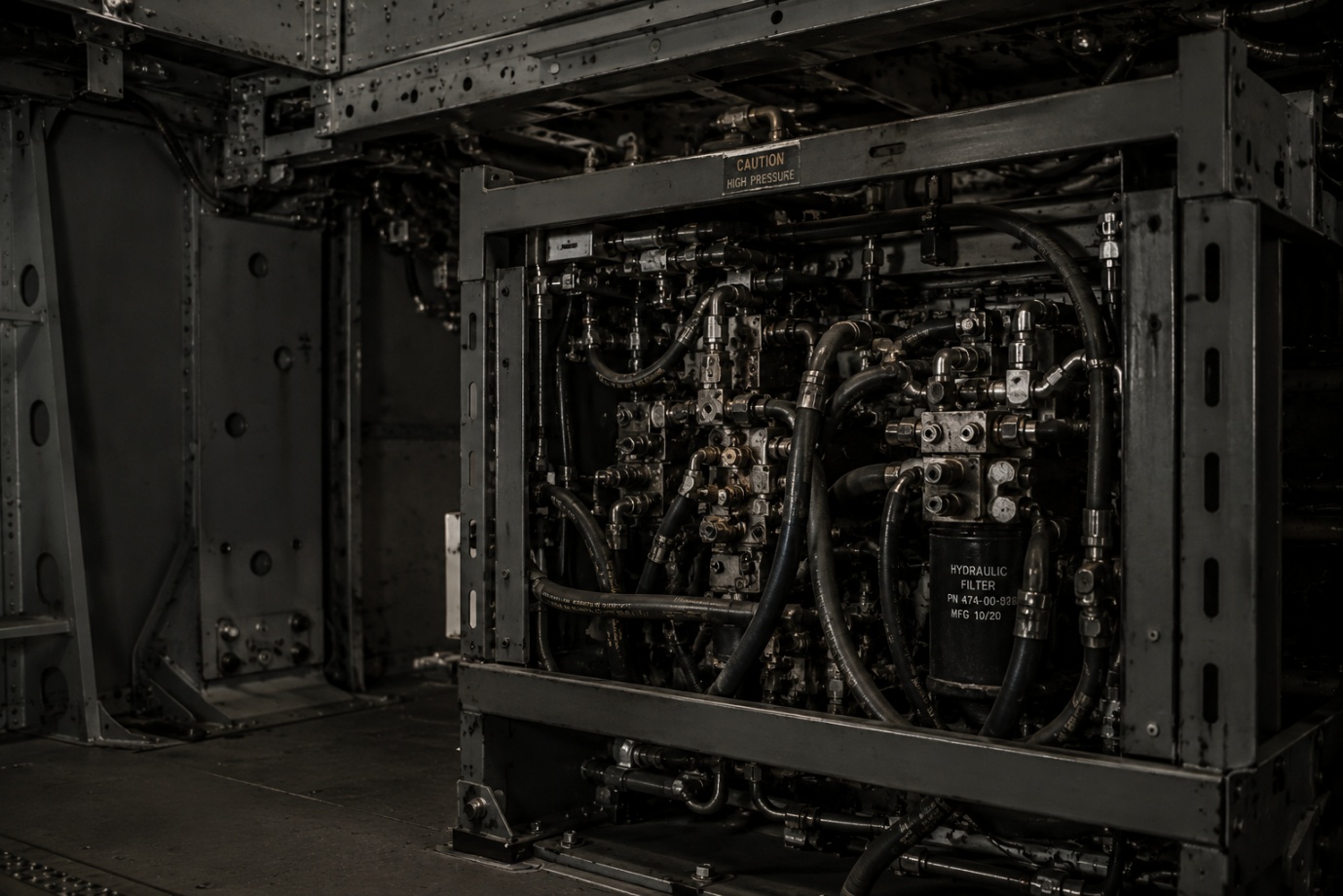
A useful example emerged during integration of a commercially available Hydraulic Power Unit into a new operational platform.
At first glance, the selection appeared low risk.
The unit was already available commercially. Supplier reliability data existed. The equipment had a history of operational use elsewhere. Relative to custom development pathways, the decision reduced acquisition complexity, accelerated integration timelines, and appeared commercially sensible. To improve physical protection, the HPU was additionally mounted within a protective cage prior to installation into the broader machine environment.
Each decision appeared logical when evaluated independently.
Yet together they created a series of interacting engineering consequences that gradually undermined the realism of the system’s predicted RAM performance.
The original HPU had been developed for comparatively stable operating environments characterised by moderate vibration exposure, controlled duty cycles, and relatively benign mechanical conditions. The new platform, however, operated in a substantially different environment involving off-road movement, shock loading, variable terrain, sustained vibration exposure, intermittent operating patterns, and fluctuating operational demand.
Two distinct mission profiles existed beneath what initially appeared to be the same equipment application.
This difference mattered because reliability assumptions are not universally portable across environments.
Supplier Mean Time Between Failure data is conditional. It reflects the environmental, operational, mounting, loading, and maintenance assumptions under which the equipment originally operated. Once those conditions change materially, failure behaviour changes with them.
Yet in many engineering environments, commercially available equipment described as “proven” implicitly acquires an assumption of reliability transferability that may not withstand operational reality.
The equipment itself may remain technically sound.
The assumptions surrounding its use may not.
Reliability Is Environment-Dependent
Reliability modelling often creates an impression of precision that can obscure the conditional nature of the underlying assumptions.
Failure rate data is not an intrinsic property existing independently of operational context. It emerges from the interaction between the equipment and the environment in which it operates.
Temperature variation influences degradation behaviour. Vibration alters fatigue accumulation. Shock loading changes structural stress distribution. Duty cycles affect wear mechanisms. Contamination exposure reshapes seal performance, lubrication behaviour, and electrical reliability. Maintenance execution quality influences latent fault development. Mounting configuration affects load transmission pathways throughout the assembly.
Once operational conditions diverge from the original qualification environment, reliability behaviour frequently diverges as well.
This becomes particularly important in defence, mining, maritime, rail, and heavy infrastructure systems where operational environments are inherently dynamic and often substantially harsher than laboratory or baseline qualification assumptions.
In the HPU example, sustained vibration exposure introduced elevated risk across multiple degradation pathways simultaneously. Seal wear rates likely increased. Fatigue behaviour within mounting structures changed. Hose and connector integrity became more vulnerable to cyclic loading. Mechanical interfaces experienced stress patterns different from those represented in the supplier’s original operational data.
None of these effects necessarily indicate poor equipment quality.
They indicate environmental mismatch between the original application and the integrated operational context.
Without adjustment for environmental severity, however, reliability predictions gradually become optimistic. And optimistic reliability assumptions inevitably produce optimistic availability forecasts.
This is one reason RAM modelling should never be treated as a purely numerical exercise detached from operational systems understanding. Reliability calculations remain meaningful only when the environmental assumptions embedded within them remain operationally credible.
Otherwise, analytical confidence can persist long after engineering realism has already begun to erode.
Integration Changes System Behaviour
The protective cage introduced a second layer of engineering consequence.
Its purpose was sensible. Increase physical protection. Improve survivability. Reduce exposure to external damage during operation.
Yet mechanical systems do not respond only to intent.
They respond to physics.
Adding structural mass and rigidity changes load transmission behaviour throughout an assembly. Mounting stiffness alters vibration pathways. Additional structural members introduce potential resonance effects. Dynamic interaction between the mounted equipment and surrounding platform structure becomes more complex. Stress concentrations can emerge in areas not originally designed for modified loading behaviour.
Protection does not automatically reduce mechanical stress.
In some circumstances, it redistributes or amplifies it.
This is one of the more subtle challenges within systems integration work. Modifications introduced to solve one operational concern can unintentionally reshape behaviour elsewhere in the system if the broader interaction effects are not fully analysed.
The issue is rarely visible during isolated component evaluation because the consequence emerges through interaction between the equipment, the mounting strategy, the operational environment, and the platform dynamics collectively.
This is why interface engineering matters so significantly within operational systems.
The interfaces themselves often become the location where risk accumulates quietly.
Not because individual engineering decisions were irrational, but because interaction effects remained insufficiently visible across organisational or disciplinary boundaries.
In the HPU case, the structural and dynamic implications of the protective cage were not fully reassessed from a RAM perspective following integration. The availability model therefore continued operating on assumptions developed prior to the environmental and structural changes introduced by the final integrated configuration.
The model remained mathematically coherent.
The operational assumptions beneath it had changed.
Maintainability Degrades Through Integration
The maintainability implications emerged more gradually.
Once enclosed within the protective structure and integrated into the broader platform architecture, physical accessibility reduced significantly. Removal pathways became constrained. Tool clearance narrowed. Inspection activity became more difficult. Additional disassembly steps were introduced into routine maintenance procedures.
None of these changes necessarily appeared severe when considered individually.
Collectively, however, they altered the practical maintainability behaviour of the system.
This distinction is important because maintainability exists operationally, not theoretically.
A component may remain technically replaceable while becoming operationally burdensome to maintain under field conditions. Maintenance labour increases. Fault isolation consumes additional time. Inspection intervals become more difficult to execute consistently. Repair activity requires greater physical manipulation within constrained spaces. Human factor complexity rises incrementally with each additional procedural obstacle introduced through packaging decisions.
Yet Mean Time To Repair assumptions often remain static within the analytical model unless maintainability reassessment occurs deliberately following integration changes.
As a result, operational availability can begin degrading quietly long before formal reliability concerns become visible.
This occurs because availability is highly sensitive to interaction between failure frequency and recovery burden.
Even moderate increases in repair time can substantially reduce achievable availability when failure rates simultaneously increase due to environmental severity effects. Additional maintenance labour drives higher operational support demand. Spare consumption increases. Downtime accumulates more rapidly across the fleet. Sustainment complexity expands progressively over time.
The consequences compound.
Operational systems rarely experience engineering variables independently from one another.
Availability Is a Systems Outcome
One of the most important lessons from cases such as this is that availability should never be interpreted as a standalone reliability metric.
Availability emerges from the combined interaction of failure behaviour, maintainability, logistics responsiveness, spare provisioning, environmental severity, operational tempo, workforce capability, and sustainment execution across time.
This is why systems punish isolated optimisation.
An engineering decision that appears beneficial within one domain may introduce second-order effects elsewhere in the lifecycle system if broader operational interactions are not examined carefully. Packaging decisions influence maintainability. Structural modifications affect fatigue behaviour. Environmental assumptions reshape reliability performance. Spare demand changes maintenance workload. Maintenance workload affects operational readiness.
The operational system experiences the total interaction effect, not the isolated intent behind each individual decision.
This becomes especially important in long-life capability environments where systems operate across decades under evolving operational conditions. Small deviations between design assumptions and operational reality compound gradually over time. What initially appears manageable at subsystem level can eventually influence fleet readiness, sustainment burden, lifecycle cost, and operational resilience at system level.
The challenge is therefore not merely performing RAM calculations.
It is preserving systems-level engineering visibility across interacting decisions throughout the lifecycle.
Engineering Governance and Operational Context
The broader issue is ultimately one of engineering governance rather than isolated technical analysis.
Complex operational systems require disciplined mechanisms capable of continuously evaluating whether engineering assumptions remain valid as integration, operational context, and lifecycle conditions evolve.
This includes reassessing supplier reliability assumptions when mission profiles change. Re-evaluating maintainability impacts following packaging modifications. Examining dynamic interaction effects introduced through structural integration changes. Updating availability modelling using realistic operational constraints rather than preserving original analytical assumptions unchanged.
Without this discipline, engineering models gradually diverge from operational behaviour.
The divergence is rarely immediate. More often, it accumulates quietly through small unchallenged assumptions carried forward across integration decisions, configuration changes, sustainment adjustments, and operational adaptations over time.
Eventually, the operational system begins revealing consequences the analytical framework no longer adequately represents.
At that stage, correction becomes substantially more expensive.
Not only financially, but organisationally and operationally as well.
Design modifications become harder to implement. Sustainment burdens become embedded within operational routines. Fleet availability margins narrow. Workarounds emerge to compensate for limitations that could have been addressed earlier had the interaction effects remained visible during integration.
This is why operational context must remain central to engineering decision-making throughout the lifecycle.
Engineering evidence only retains value when connected continuously to the real operational conditions shaping system behaviour.
Systems Learn Consequence Over Time
The HPU itself was not inherently flawed.
Nor were the original engineering decisions negligent.
Commercial equipment reuse is often sensible. Protective structures can be operationally necessary. Supplier reliability data remains valuable. Availability modelling is essential engineering practice.
The difficulty emerged because each decision was evaluated primarily within its local context while the combined operational interactions remained insufficiently integrated.
This is a recurring pattern across complex operational systems.
Reliability assumptions developed in one environment migrate into another without adequate recalibration. Integration changes alter maintainability behaviour without corresponding updates to recovery assumptions. Structural modifications influence dynamic loading without reassessment of fatigue implications. Availability models continue operating on analytical conditions that no longer fully reflect operational reality.
Over time, the system itself exposes the gaps between isolated engineering reasoning and integrated operational behaviour.
Operational systems are unforgiving in this respect.
They continuously test assumptions against real environmental conditions, real maintenance activity, real logistics performance, and real operational demand. Where engineering understanding remains fragmented, availability degradation eventually appears somewhere within the lifecycle system.
Usually not dramatically at first.
More often through increasing maintenance burden, elevated spare consumption, longer downtime durations, reduced sustainment predictability, and gradual erosion of operational resilience over time.
The most effective engineering organisations recognise this early.
They understand that RAM performance is not simply a property of individual components, nor a compliance output generated during design reviews. It is a systems outcome shaped continuously by operational context, lifecycle interaction, and disciplined engineering integration across the full capability environment.
Because in complex operational systems, availability is rarely lost through a single bad decision.
More often, it degrades quietly at the interfaces between individually reasonable ones.