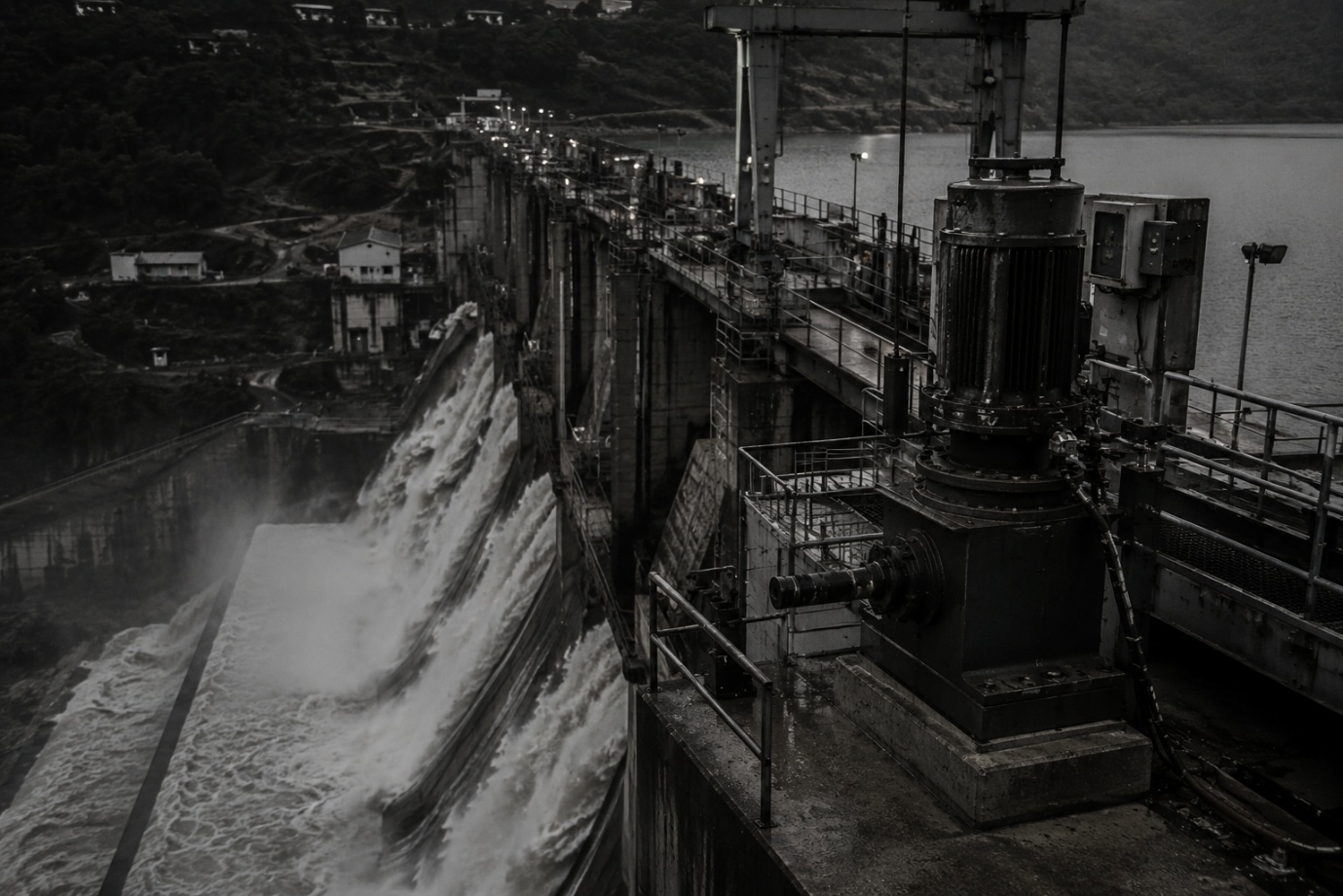
In systems engineering literature, the construction of the Aswan High Dam is often referenced as an example of how technically successful interventions can still produce destabilising system effects.
The engineering objective itself was rational and well-defined. For centuries, annual flooding of the Nile created agricultural disruption, infrastructure damage, and cyclical instability across large parts of Egypt. The dam introduced flow control, water storage, irrigation predictability, and electrical generation capability on a scale previously impossible.
From the perspective of flood control infrastructure, the project succeeded.
But the Nile was never solely a water management system.
Seasonal flooding had also transported nutrient-rich sediment into downstream agricultural zones and the Eastern Mediterranean ecosystem. Once flooding ceased, sediment movement changed. Fisheries declined. Delta erosion accelerated. Soil salinity patterns shifted. Irrigation conditions altered disease ecology in ways that contributed to increased prevalence of bilharzia in surrounding regions.
The intervention solved one problem while simultaneously reshaping a wider network of environmental, agricultural, economic, and public health systems.
The issue was not engineering incompetence.
Nor was it the absence of technical capability.
The deeper issue concerned system boundary definition.
The engineering problem had been framed primarily as flood control infrastructure. In operational reality, however, the system extended far beyond hydraulic regulation alone. Ecological systems, agricultural systems, human health systems, regional economic systems, and environmental feedback mechanisms all existed within the same operational environment whether they were formally included within the project scope or not.
That distinction remains highly relevant to modern engineering programs.
Complex systems punish narrow optimisation because engineering decisions interact dynamically across operational, organisational, environmental, and lifecycle boundaries.
This is not abstract systems philosophy. It is a recurring operational reality visible across defence, mining, maritime, infrastructure, rail, and industrial capability environments where local technical optimisation frequently reshapes broader system behaviour in ways not fully visible during initial design.
Engineering Problems Rarely Stay Contained
Engineers are trained to solve defined problems.
Reduce weight. Improve reliability. Lower cost. Increase throughput. Meet the requirement. Reduce downtime. Improve efficiency. Achieve compliance.
And often, these objectives are achieved successfully within their defined technical boundaries.
The challenge is that operational systems do not respond to interventions in isolation.
They respond as interconnected networks of dependencies, constraints, feedback loops, and interacting behaviours operating simultaneously across technical, human, environmental, organisational, and logistical domains.
When one variable is optimised aggressively without sufficient understanding of surrounding interactions, the resulting stress rarely disappears. More often, it migrates elsewhere within the system.
This migration may not become visible immediately.
A subsystem redesign reduces weight but constrains maintainability access. A software enhancement improves automation while increasing operator diagnostic complexity. A reliability improvement increases thermal load elsewhere within the platform. Additional redundancy improves survivability but doubles maintenance burden. Supply chain optimisation reduces inventory holdings while increasing operational vulnerability to disruption.
Each decision may remain individually rational.
Collectively, however, they reshape the operational behaviour of the wider system.
This is one of the defining characteristics of complex engineered environments. The total system often behaves differently from what isolated subsystem optimisation would predict.
The consequences emerge not from any single component, but from interaction effects between components, organisations, operational conditions, sustainment structures, and lifecycle behaviours over time.
Operational systems continuously reveal relationships that design decomposition alone can obscure.
The Problem of Boundary Definition
Systems thinking begins with an uncomfortable but necessary question:
What is the real system?
The answer is rarely as straightforward as organisational structures or engineering scopes suggest.
A design team may define the system as the subsystem currently under development. A procurement organisation may define it as the delivered platform. A sustainment organisation may define it as the support network. Operational users may define it through mission availability. Financial governance may define it through lifecycle cost exposure.
In reality, all of these interpretations may coexist simultaneously.
The difficulty is that engineering boundaries are often shaped less by operational behaviour than by organisational convenience. Programs divide work into packages. Disciplines separate responsibilities. Performance metrics become localised. Reporting structures reinforce functional segmentation. Engineering authority becomes distributed across acquisition, sustainment, software, logistics, operations, and supplier environments.
Under these conditions, artificial boundaries emerge within systems that operational reality itself does not recognise.
The Aswan example illustrates this clearly. Flood control was treated as the primary engineering system. The surrounding ecological and agricultural systems remained operationally connected regardless of whether they sat inside the project’s formal boundary definition.
Modern engineering environments experience similar dynamics repeatedly.
A maintenance organisation may inherit sustainment burdens created during acquisition. Software updates may alter operational workload in ways not visible to development teams. Supply chain constraints may reshape availability outcomes despite technically reliable equipment. Environmental exposure may accelerate degradation beyond assumptions embedded within original qualification testing.
Operational systems do not respect organisational segmentation.
They respond to total interaction behaviour across the full lifecycle environment.
This is one reason availability should never be understood as a purely technical property emerging from component reliability alone.
Availability is a systems outcome.
Availability Emerges From Interaction
In complex operational environments, reliability improvement at local level does not necessarily improve operational availability globally.
A component may fail less frequently while simultaneously increasing repair burden, spare demand, maintenance complexity, or logistics dependence elsewhere within the system.
This distinction becomes particularly important in defence, rail, mining, maritime, and industrial systems where operational readiness depends on continuous interaction between engineering, sustainment, logistics, workforce capability, environmental exposure, and operational tempo.
Availability does not emerge from reliability calculations alone.
It emerges from interaction between failure behaviour, maintainability pathways, logistics responsiveness, supply support, diagnostics, configuration management, workforce execution, and operational demand across time.
This is why narrow optimisation frequently produces unintended lifecycle consequence.
A subsystem may achieve stronger Mean Time Between Failure performance while requiring specialised tooling unavailable at forward operating locations. A design improvement may reduce mass while increasing vibration transmission into adjacent assemblies. Redundancy may improve survivability while substantially increasing inspection workload and maintenance downtime. Cost reduction measures may lower acquisition expenditure while introducing long-term sustainment fragility.
Each decision appears technically defensible within its immediate context.
The operational system experiences their combined effect simultaneously.
This interaction dynamic is often where hidden lifecycle risk accumulates.
Not because engineering analysis was absent, but because analysis remained too narrowly scoped around isolated objectives rather than broader operational consequence.
Emergent Behaviour in Engineered Systems
Emergent behaviour is sometimes discussed as though it belongs primarily to natural ecosystems or abstract systems theory.
In practice, it is deeply familiar to experienced operational engineers.
Complex engineered systems regularly exhibit behaviours that cannot be understood fully through isolated subsystem analysis alone. Interactions between software, hardware, operators, maintainers, supply chains, environmental exposure, and organisational processes create behavioural patterns that emerge only once the full operational environment begins functioning together.
The system becomes more than the sum of its individually optimised parts.
This is visible repeatedly within long-life operational capability environments.
An apparently minor software change alters operator workflows enough to increase maintenance-induced fault introduction. Packaging decisions constrain access pathways, extending repair durations beyond planning assumptions. Inventory optimisation initiatives unintentionally reduce resilience against intermittent supply disruption. Data management structures create configuration ambiguity between sustainment and operational baselines.
None of these outcomes necessarily result from poor engineering decisions in isolation.
The consequence emerges through interaction.
Operational environments expose these interactions gradually over time because real systems operate continuously under conditions far more dynamic than controlled development environments can fully replicate.
This is why lifecycle engineering requires more than technical decomposition.
It requires sustained systems-level interpretation capable of examining how decisions propagate across operational boundaries over time.
Organisational Silos and Local Optimisation
One of the more persistent drivers of fragmented systems thinking is organisational structure itself.
Modern engineering programs often divide authority across highly specialised domains. Design engineering, software development, logistics support, sustainment management, operational capability, procurement, and supplier integration may all operate through separate reporting structures, contractual arrangements, and performance metrics.
Within these environments, local optimisation becomes structurally encouraged.
Engineering teams are rewarded for achieving weight reduction targets. Procurement functions focus on acquisition cost. Sustainment organisations manage operational workload. Program offices prioritise delivery milestones. Reliability teams optimise analytical metrics. Software organisations manage release schedules independently.
Each group may perform competently according to its own objectives.
Yet no single function necessarily retains continuous visibility across the entire operational system.
This fragmentation matters because complex systems rarely fail neatly along disciplinary boundaries. More often, operational degradation emerges at interfaces between organisations, assumptions, responsibilities, and decision environments.
A technically successful subsystem may still create sustainment instability elsewhere. A cost-efficient procurement strategy may increase lifecycle support exposure. A software optimisation may complicate operational fault isolation. Availability targets may appear achievable analytically while remaining operationally fragile due to supply dependencies or maintenance constraints.
Operational systems absorb the totality of these interactions regardless of how responsibilities are divided contractually or organisationally.
This is why systems thinking is fundamentally a governance discipline as much as a technical one.
The objective is not merely analytical sophistication.
It is preserving coherence across interacting decisions throughout the lifecycle.
Operational Systems Reveal Consequence Slowly
One of the more difficult aspects of systems engineering is that many interaction effects emerge gradually rather than immediately.
Programs can appear technically successful during development while hidden operational burdens accumulate beneath the surface.
Maintenance workload expands incrementally. Diagnostics become progressively more complex. Spare demand increases beyond original assumptions. Configuration management becomes harder to sustain. Environmental degradation patterns emerge slowly over years rather than months. Operational workarounds compensate for architectural friction that was not fully visible during design.
By the time these effects become obvious, correction is often significantly more expensive.
Not because the original decisions were irrational, but because operational systems continuously expose relationships that remain difficult to observe during isolated engineering activity.
The Aswan High Dam illustrates this dynamic clearly. The full ecological and public health consequences did not emerge instantly at commissioning. They developed gradually through interaction between altered water flow, sediment movement, irrigation behaviour, disease vectors, and environmental response over time.
Modern operational systems behave similarly.
Design assumptions interact with operational reality continuously across decades of service life. Systems either adapt through disciplined feedback and systems-level governance, or operational complexity gradually accumulates faster than engineering understanding.
Systems Thinking as Practical Risk Management
Systems thinking is sometimes treated as an abstract intellectual exercise disconnected from practical engineering delivery.
In operational environments, the opposite is true.
Systems thinking is practical risk management.
Its purpose is not to prevent engineering intervention or create analytical paralysis. Complex systems still require decisions, trade-offs, optimisation, and operational compromise. Engineering programs cannot model every interaction exhaustively before acting.
The discipline lies in recognising that local technical success does not guarantee broader system stability.
Good systems thinking therefore expands perspective deliberately. It asks where stress might migrate when one variable is optimised. It examines hidden dependencies between sustainment, operations, logistics, software, environment, and organisational behaviour. It recognises that availability, resilience, maintainability, and operational readiness emerge through interaction rather than isolated component performance alone.
Most importantly, it preserves awareness that engineering systems always exist within larger operational ecosystems whether those boundaries are formally acknowledged or not.
This principle becomes increasingly important as modern capability environments grow more interconnected, software-dependent, data-driven, and organisationally distributed across the lifecycle.
The complexity itself is not new.
What changes is the speed at which interaction effects propagate through the operational system once engineering assumptions diverge from operational reality.
Engineering Success and System Consequence
The lesson of the Aswan High Dam is not that infrastructure projects should avoid intervention.
Nor is it that engineering optimisation is inherently flawed.
The deeper lesson is that technical success and system success are not always identical outcomes.
An intervention can achieve its immediate engineering objective while simultaneously reshaping broader operational systems in ways not fully anticipated within the original boundary definition.
This remains true whether the system involves river ecosystems, defence platforms, rail networks, mining operations, maritime capability, or industrial infrastructure.
Complex systems continuously test engineering assumptions against operational reality across environmental, logistical, organisational, and lifecycle boundaries.
Where engineering visibility remains too narrow, consequence eventually emerges elsewhere in the system.
Usually not through dramatic failure at first.
More often through gradual erosion of availability, sustainment predictability, operational resilience, lifecycle efficiency, and organisational adaptability over time.
The most resilient engineering environments understand this distinction.
They recognise that systems thinking is not philosophical abstraction layered on top of engineering work. It is the mechanism through which engineering decisions remain connected to operational consequence across the lifecycle.
Because in complex operational systems, engineering decisions rarely stay local for long.